

ISO 17025 Requirements Explained: A 2026 Guide for Testing Labs
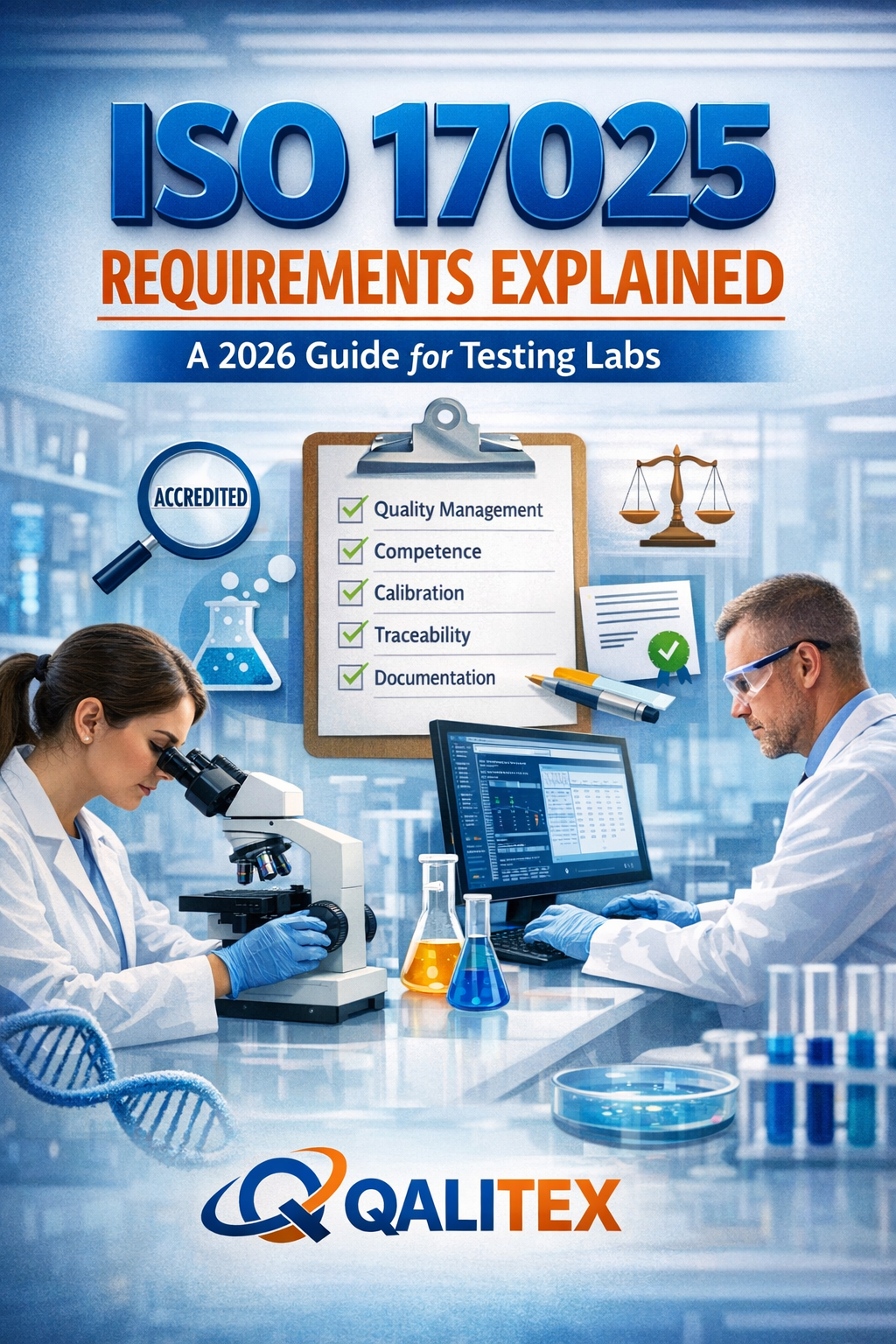
Guide covers ISO 17025 lab requirements and how brands can verify compliance before choosing a testing partner.
IRVINE, CA, UNITED STATES, March 31, 2026 /EINPresswire.com/ -- Qalitex Laboratories, an ISO 17025-accredited third-party testing laboratory with facilities in Irvine and San Diego, California, today published a detailed explanation of ISO/IEC 17025:2017 technical requirements for testing laboratories — helping supplement and cosmetic brands understand what accredited laboratories must demonstrate and how to verify compliance before choosing a testing partner.ISO/IEC 17025:2017 is organized into five sections: general requirements, structural requirements, resource requirements, process requirements, and management system requirements. The technical substance of the standard is concentrated in the resource requirements and process requirements sections, which define what a laboratory must demonstrate to be considered competent to perform testing.
Resource requirements under ISO 17025:2017 cover personnel, facilities and environmental conditions, equipment, metrological traceability, and externally provided products and services. Personnel requirements mandate that laboratory staff have the education, training, technical knowledge, and skills appropriate to the tests they perform. Equipment requirements mandate that all equipment used for testing be calibrated and maintained, with calibration records traceable to national or international measurement standards. Metrological traceability requirements mandate that all measurement results be traceable to the International System of Units (SI) through an unbroken chain of calibrations.
"The equipment calibration and metrological traceability requirements are among the most technically demanding aspects of ISO 17025 accreditation," said Nour Abochama, Vice President of Operations at Qalitex Laboratories. "Every instrument we use for testing — HPLC systems, ICP-MS instruments, stability chambers, balances — has a calibration record that traces back to national standards. That traceability is what gives our test results their regulatory credibility. It's also what accreditation assessors check most carefully during on-site assessments."
Process requirements under ISO 17025:2017 cover the selection, verification, and validation of test methods; sampling; handling of test items; technical records; evaluation of measurement uncertainty; ensuring the validity of results; reporting of results; complaints; nonconforming work; and control of data and information management. The method validation requirements are particularly significant for dietary supplement testing: laboratories must validate test methods to demonstrate that they are fit for their intended purpose, including specificity, linearity, accuracy, precision, and detection and quantitation limits.
Proficiency testing participation is a key requirement under ISO 17025:2017. Laboratories must participate in proficiency testing programs — external quality assurance programs that provide laboratories with blind samples and compare their results against other participating laboratories. Proficiency testing results demonstrate that a laboratory's test methods produce accurate results on an ongoing basis, not just at the time of the initial accreditation assessment.
Management system requirements under ISO 17025:2017 cover document control, control of management system records, internal audits, management reviews, and corrective actions. These requirements ensure that the laboratory's quality management system is maintained and continuously improved over time. Accreditation bodies evaluate management system compliance during annual surveillance assessments and periodic full reassessments.
"The brands that get the most value from understanding ISO 17025 requirements are the ones that use that understanding to ask better questions of their testing laboratories," said Nour Abochama. "Asking a laboratory about their method validation data, their proficiency testing participation, and their equipment calibration records is not an unusual request — it's exactly what ISO 17025 requires them to have. A laboratory that can't answer those questions specifically is not providing the level of transparency that accreditation is supposed to guarantee."
RESOURCES
Full article: https://qalitex.com/blog/iso-17025-requirements-accredited-labs/
ABOUT QALITEX LABORATORIES
Qalitex Laboratories is an ISO 17025-accredited third-party analytical testing laboratory with facilities in Irvine and San Diego, California. The laboratory provides certificate of analysis (COA) testing, heavy metal analysis by ICP-MS, microbiology testing per USP <61> and <62>, preservative efficacy testing, stability studies under ICH guidelines, and regulatory compliance support for dietary supplement brands, cosmetic companies, and consumer goods manufacturers. Turnaround times start at 48 hours for standard panels. Testing programs meet 21 CFR Part 111, California Proposition 65, Amazon supplement compliance requirements, and Health Canada NHP Directorate standards.
Nour Abochama
Qalitex Laboratories
+ +1 949) 881-6661
email us here
Visit us on social media:
LinkedIn
Instagram
Facebook
Legal Disclaimer:
EIN Presswire provides this news content "as is" without warranty of any kind. We do not accept any responsibility or liability for the accuracy, content, images, videos, licenses, completeness, legality, or reliability of the information contained in this article. If you have any complaints or copyright issues related to this article, kindly contact the author above.
