

National Survey Finds America's Generations Share the Same Hopes But Live Very Different Realities
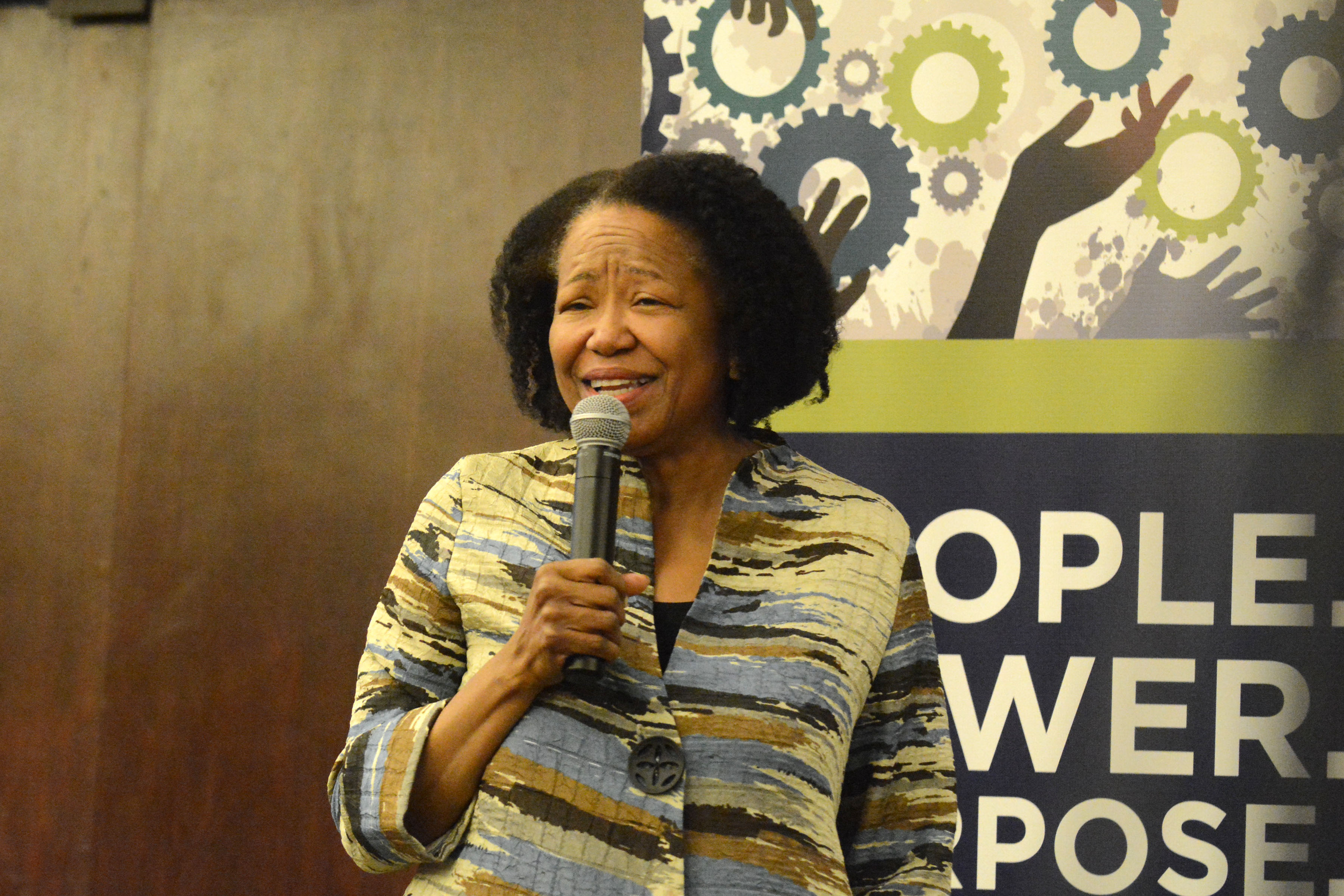
Dr. Gail C. Christopher
NCHE's annual survey shows young and old Americans agree on the destination but diverge sharply on discrimination, democracy, and the path to racial healing
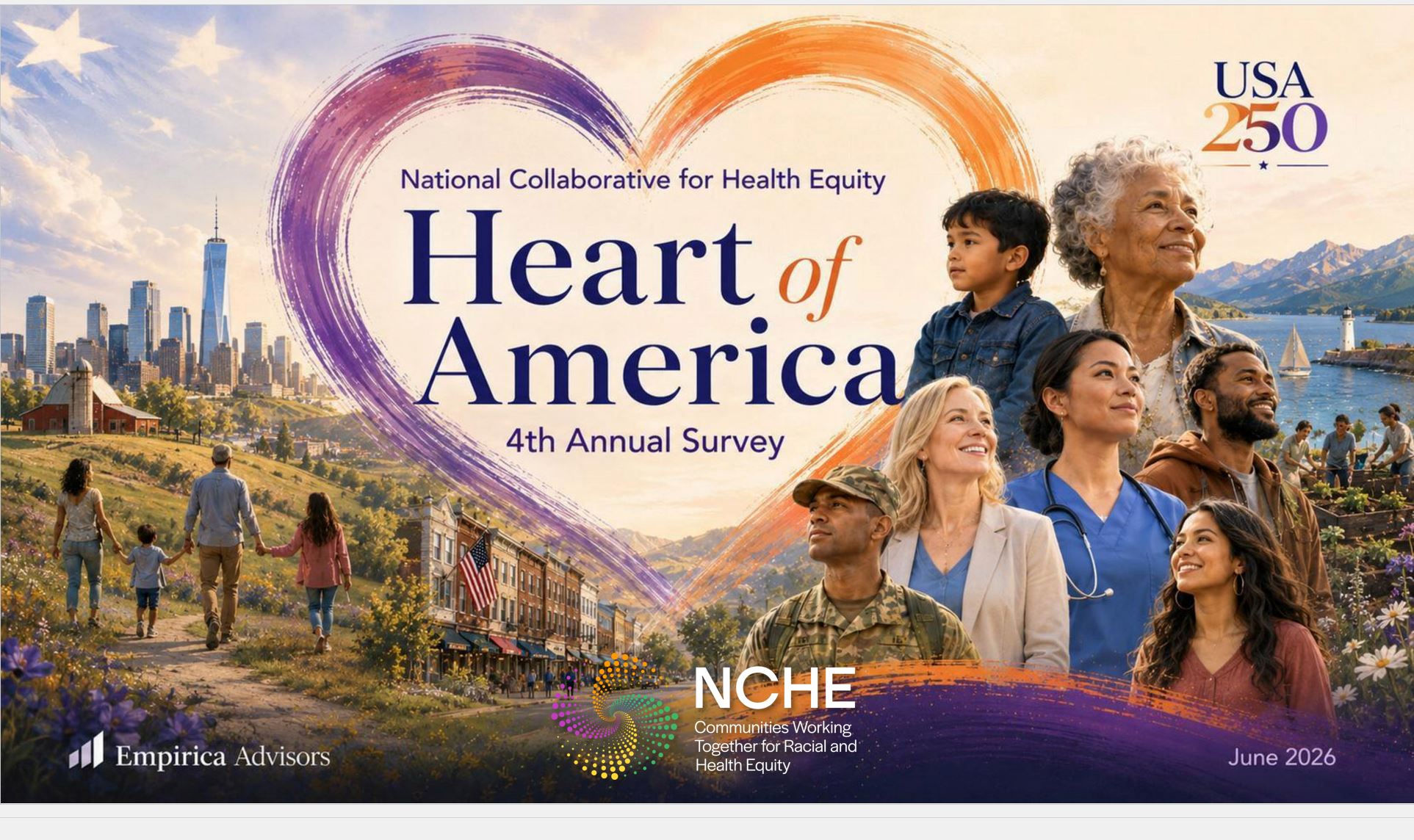
WASHINGTON, DC, UNITED STATES, November 2, 2026 /EINPresswire.com/ -- The National Collaborative for Health Equity (NCHE) today published a new article by its Executive Director, Dr. Gail C. Christopher. Titled "America's Generations Agree on the Destination. They're Living Different Journeys," the piece draws on data from NCHE's 4th Annual Heart of America Survey to examine how America's generations see the country — and each other — as the nation marks its 250th anniversary.
The article reviews responses of 1,322 Americans on the forces that hold a nation together or pull it apart: unity, belonging, race, democracy, and the relentless pressures of daily life. Comparing the answers of adults ages 18 to 34 with those of Americans 65 and older, Dr. Christopher finds broad agreement on core values — and gaps of up to 40 percentage points in lived experience and civic priorities.
She writes, "Young and old Americans want largely the same things for this country. They share the same hopes. Yet, they do not share the same realities and perspectives."
Further, Dr. Christopher said, "Young and old Americans share the same dreams for this country, and that should give all of us hope. But shared values don't pay the rent or protect anyone from discrimination. A nation can agree on where it wants to go and still fracture under the weight of unequal realities. If we want to heal our divisions, we have to understand the burdens people carry, not just the opinions they hold."
Americans of every age agree the country is deeply divided. Eighty-three percent of young adults and 89 percent of seniors say the nation is more divided than ever. Yet roughly seven in ten in both groups remain hopeful that Americans can work through their differences and find lasting common ground.
Both generations also want a different kind of leadership. More than eight in ten young and older adults want leaders who can see past labels and political tricks. Large majorities would support a leader who aims to unite the country even when they disagree with some of that leader's positions.
On many culture-war issues, the generations are strikingly close:
• Faith matters to three in four Americans, regardless of age.
• Opportunity: About 53 percent in both groups believe all Americans have the same chance at a good life, while 47 percent see inequality as systemic.
• Immigration: Roughly two-thirds of both groups say immigration strengthens the nation.
• History education: About nine in ten young and older adults agree that schools should teach the full history of America, including slavery and racism.
On these ideological questions, political party divides Americans far more than age does. That finding challenges the popular story of a simple war between generations.
The survey's biggest gaps are not about ideology. They reflect lived experience, views on how democracy works, and beliefs about how to repair past harms.
Discrimination is a daily reality for the young. Seventy percent of young adults say they have personally experienced discrimination because of their race, compared with 34 percent of seniors. Gaps are just as wide for discrimination based on religion, gender, and sexuality. Three in ten young adults say they experience racism or discrimination frequently, compared with fewer than one in ten seniors. Part of this reflects demographic change: only 30 percent of young respondents are white, compared with 82 percent of seniors.
"Our young people are meeting America's oldest wounds firsthand," said Dr. Christopher. "Years in health equity have taught me that people's outcomes are shaped by the conditions they live in. The same is true for the health of our democracy. When seven in ten young adults tell us they have faced racial discrimination, that is not a statistic to debate. It is a reality we must respond to with care and with action."
Reparations mark the widest divide. Three in four young adults say reparations for the descendants of enslaved Americans are important, compared with roughly 35 percent of seniors. This is the single largest gap in the survey. Seniors more often favor relationship building and working toward common goals as the path to racial healing.
The generations diagnose different problems. Asked to name the biggest obstacles to an America where everyone shares equally in opportunity, 74 percent of seniors chose political divisiveness. Only 34 percent of young adults did. Younger Americans instead point to racism, gender discrimination, police brutality, and over-incarceration. Older Americans see broken politics. Younger Americans see broken systems.
Daily pressures fall unevenly. Every generation feels the cost of groceries and health care. But young adults are twice as likely as seniors to feel pressure to find stable, well-paying work (75 percent vs. 35 percent) and more than twice as likely to feel squeezed by childcare costs.
One of the survey's most striking findings is the gap between Gen Z and Millennials. Millennials, now roughly in their 30s and 40s, are the most optimistic generation surveyed. Seventy-eight percent are hopeful Americans can find common ground, and half believe America is living up to its ideals of freedom, fairness, and equal opportunity.
Gen Z tells a different story. Only 46 percent say they are proud to be American, compared with about two-thirds of every older generation. Just 64 percent believe Americans have more in common than not, compared with 79 percent of Millennials, Gen X, and Baby Boomers. This generation came of age during a pandemic, constant social media, and economic uncertainty.
Young adults also feel division closer to home. Seventy percent worry about disunity in their own communities, compared with 46 percent of seniors. For older Americans, division is something happening in Washington. For younger Americans, it is happening on their block, in their schools, and in their social feeds.
With the November 3 midterms one day away, the findings suggest that turnout, more than persuasion, may decide outcomes.
Older Americans strongly value the vote. Eighty-eight percent of seniors say it is very important that every eligible American can vote, compared with only half of young adults. Seventeen percent of Gen Z say it is not important. Voters 50 and older made up nearly two-thirds of the 2022 midterm electorate, while recent polling shows only about a third of adults under 30 say they will definitely vote this year.
The two groups are also asking for different things. Seventy-seven percent of seniors prefer leaders who will work with people they disagree with. Young adults are looking for candidates who speak to jobs, wages, housing, childcare, and discrimination. Notably, age is not a reliable stand-in for party: young adults and seniors identify as Democrats and Republicans in similar proportions.
"Our elders are telling us the institutions that bind us are worth protecting. Our young people are telling us those institutions must work for them, too," said Dr. Christopher. "Candidates who address the cost of living that burdens every generation, while showing they can govern across lines, will reach the broadest audience. A politics that only lowers the temperature won't earn the next generation's trust. A politics that only pursues change without repairing our ability to talk to one another won't hold the country together."
Despite the gaps, the survey points to real momentum for bridge-building. Young adults are more than twice as likely as seniors to say they sought out conversations with people who disagree with them more often this past year. Two-thirds believe people like them can help promote unity and racial healing. Seven in ten seniors say they want to hear from multiple generations, and 84 percent of young adults want leaders who can see the world in a completely new way.
"The appetite for healing is strongest among the people who will inherit this country, and that is the most hopeful news of all," said Dr. Christopher. "As America enters its next 250 years, our task is to build a nation where every generation can see itself in the American promise. That work begins when we listen to each other across the ages and commit to easing the burdens that keep us apart."
The full article is available HERE
****
(For media interviews with Dr. Christopher, please contact Mike Frisby at mike@frisbyassociates.com or 202-625-4328)
About the National Collaborative for Health Equity
Launched in 2014, the National Collaborative for Health Equity is a young organization with a long history and body of work. NCHE was incubated in 2005 as the Health Policy Institute, one of several institutes at the Joint Center for Political & Economic Studies. Today, NCHE develops new initiatives to advance the health and racial equity movement while leveraging this history as a national convener and coalition builder for over a decade. NCHE provides an extensive body of data, tools, and resources to equip leaders from historically marginalized and excluded communities to improve the conditions that shape health. These tools include leadership support, policy analysis, data mining and analysis, and community organizing and mobilization to address a range of factors that are the ultimate determinants of health and well-being.
Michael K. Frisby
Frisby & Associates
+1 202-625-4328
mike@frisbyassociates.com
Legal Disclaimer:
EIN Presswire provides this news content "as is" without warranty of any kind. We do not accept any responsibility or liability for the accuracy, content, images, videos, licenses, completeness, legality, or reliability of the information contained in this article. If you have any complaints or copyright issues related to this article, kindly contact the author above.
